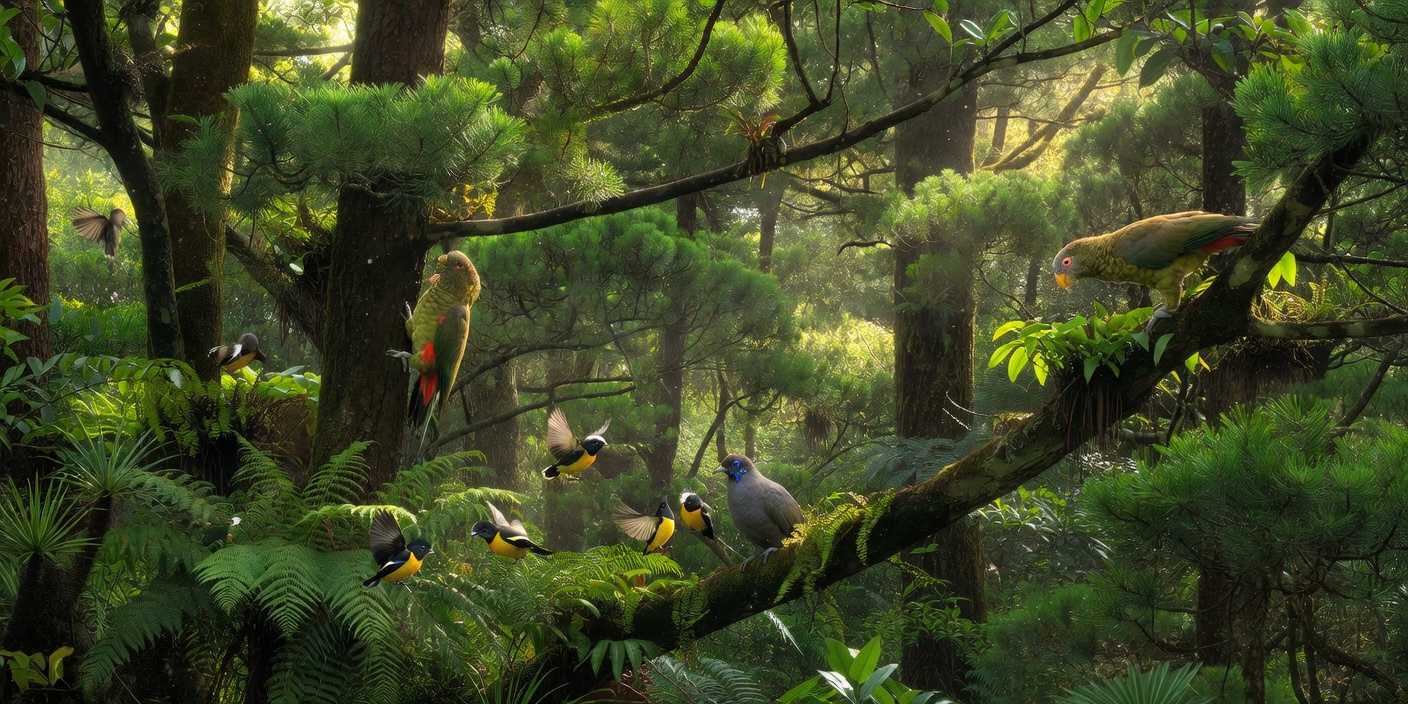
Because New Zealand broke away from the supercontinent of Gondwana approximately 80 million years ago, it evolved in total isolation with virtually no native land mammals (except for three species of small bats). Birds became the dominant herbivores, seed-dispersers, and forest-dwellers—many evolving into flightless forms with ground-nesting habits.
The Evolutionary Crisis & Predator Free 2050
The introduction of invasive mammalian predators—namely stoats, possums, feral cats, and rats—wreaked havoc on defenseless native fauna. In 2016, New Zealand launched the world’s most ambitious biodiversity initiative: Predator Free 2050, aiming to completely eradicate introduced stoats, rats, and possums from the entire mainland by mid-century using automated trapping grids, community trapping groups, and biological innovations.
Endemic Avian Profile & Sanctuaries
1. The Kiwi (Apteryx spp.)
National Icon • 5 Recognized SpeciesFlightless, nocturnal, and possessing nostrils at the very tip of its long bill, the Kiwi has hair-like feathers and lays eggs that represent up to 20% of the female's body weight. Major recovery centers like *Operation Nest Egg* hatch chicks in captivity and release them once they reach a stoat-defending weight of 1.2 kg.
2. Kea (Nestor notabilis)
World’s Only Alpine ParrotRenowned for its olive-green plumage, crimson underwings, and staggering puzzle-solving intelligence. Inhabiting high-altitude scree slopes in the Southern Alps, Kea are naturally inquisitive but strictly protected; feeding them human food damages their gut health and habituates them to dangerous roadside traffic.
3. Takahē (Porphyrio hochstetteri)
Once Thought Extinct (Rediscovered 1948)A large, heavy flightless swamphen with vibrant indigo and turquoise feathers and a bright scarlet frontal shield. Following intensive breeding at the Burwood Takahē Centre in Te Anau, populations now exceed 500 birds, with successful reintroductions into the Greenstone Valley.
Where to Responsibly Encounter Native Wildlife
To observe these extraordinary creatures without disrupting sensitive wild breeding populations, visit verified mainland eco-sanctuaries protected by pest-exclusion fences:
- Zealandia Te Māra a Tāne (Wellington): World’s first fully fenced urban eco-sanctuary, home to over 20 native wildlife species.
- Sanctuary Mountain Maungatautari (Waikato): The largest pest-fenced reserve on mainland New Zealand encompassing an entire forested mountain.
- Kapiti Island Nature Reserve: Offshore predator-free island hosting thriving populations of Little Spotted Kiwi and Takahe.