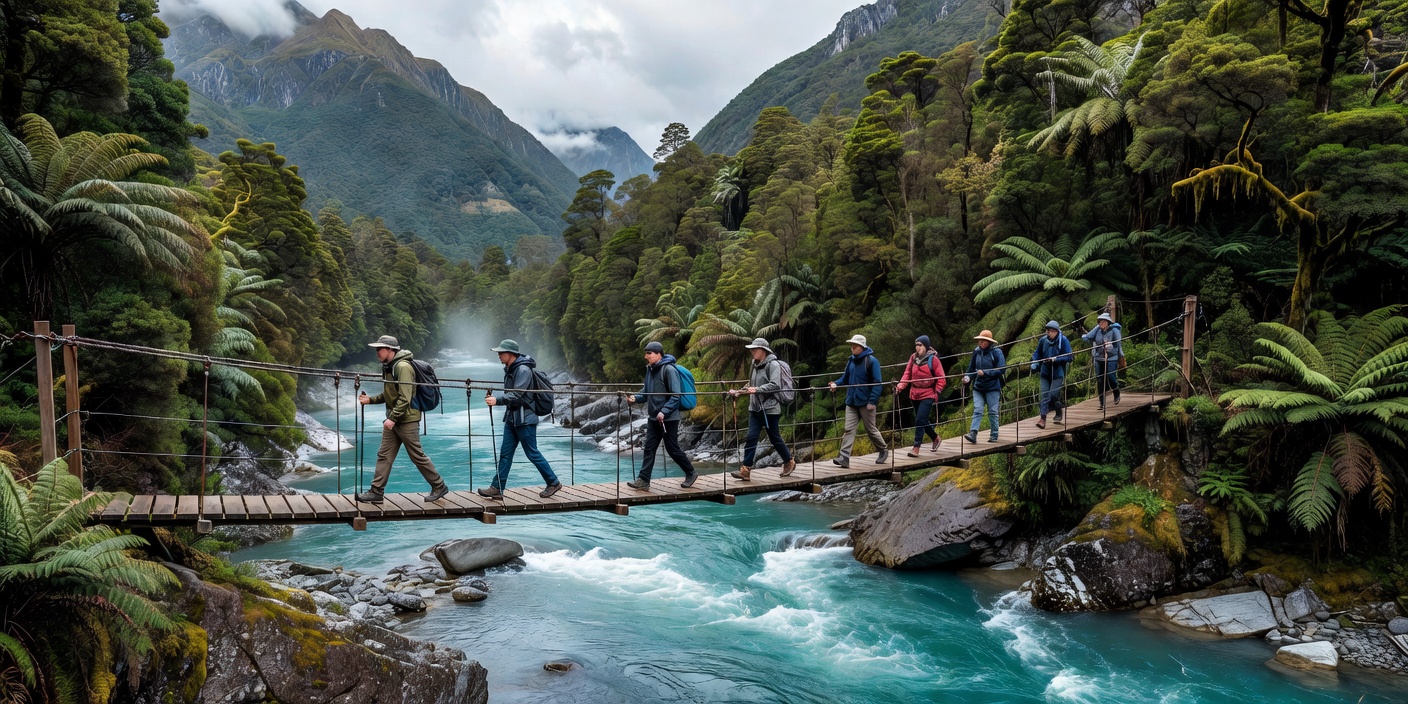
The Legend of "The Finest Walk in the World"
Since poet Blanche Baughan declared it "The Finest Walk in the World" in the London Spectator in 1908, the Milford Track has stood as the pinnacle of New Zealand's Great Walk network. Stretching 53.5 kilometers across Fiordland National Park (part of the Te Wāhipounamu UNESCO World Heritage Area), the track crosses deep glacial valleys, ancient moss-laden beech forests, and the dramatic 1,069-meter alpine Mackinnon Pass before culminating at the edge of the world-renowned Piopiotahi (Milford Sound).
Because the Department of Conservation (DOC) strictly limits independent walkers to 40 departures per day during the Great Walks season, the trail preserves a profound sense of solitude, untouched native ecosystems, and uncompromised wilderness authenticity.
Day-by-Day Expedition Itinerary
| Day & Stage | Distance | Est. Time | Elevation Change & Highlights |
|---|---|---|---|
| Day 1: Glade Wharf to Clinton Hut | 5.0 km | 1 - 1.5 hrs | Flat, gentle trail through beech forest along Clinton River. |
| Day 2: Clinton Hut to Mintaro Hut | 16.5 km | 5 - 6 hrs | +200m gradual climb into Clinton Valley; Lake Mintaro moraine. |
| Day 3: Mintaro Hut to Dumpling Hut | 14.0 km | 6 - 7 hrs | +490m to Mackinnon Pass (1,073m), -800m descent past Sutherland Falls (580m). |
| Day 4: Dumpling Hut to Sandfly Point | 18.0 km | 5 - 6 hrs | Gentle descent along Arthur River, Mackay Falls, Giant Gate Falls to boat transfer. |
Sutherland Falls: New Zealand's 580m Cascade
On Day 3, after navigating the hairpin switchbacks down from Mackinnon Pass, hikers reach the junction for Sutherland Falls. Dropping 580 meters in three colossal leaps from Lake Quill, Sutherland Falls is one of the highest and most powerful waterfalls in Oceania. Dropping your heavy pack at the public shelter and taking the 1.5-hour return side track to the base of the falls is an essential highlight of the entire trek.
⚠️ Severe Weather & Alpine Flood Protocols
Fiordland receives up to 9,000 mm of annual rainfall. During atmospheric river events, side creeks can surge in under 30 minutes. Always follow the daily safety briefing from the resident DOC Hut Rangers, carry river safety essentials, and never attempt to cross flooded alpine bridges if instructed to wait for water levels to drop.
Essential Gear Checklist for Fiordland
Independent walkers must be 100% self-sufficient. There are no food stores, bedding rentals, or electricity at the huts:
- Layering System: Merino wool baselayers, heavy fleece midlayer, and a seam-sealed 3-layer Gore-Tex rain jacket with 20,000mm waterproofing.
- Footwear: Broken-in waterproof trekking boots with Vibram outsoles and gaiters for mud and river crossings.
- Camp Kitchen: Lightweight backpacking stove, fuel canisters, cooking pot, and 4 days of dehydrated calorie-dense rations.
- Insect Defense: High-strength DEET or Picaridin repellent to combat the infamous Fiordland sandflies at Sandfly Point.